
Acoustic Gym Rubber Flooring & Underlay Systems: The Complete Guide (2026)
Introduction
Whether you are building a commercial fitness centre, a boutique gym, or a private gym room at home, one of the most critical — and most overlooked — elements of your gym room setup is what goes beneath your feet. Acoustic gym rubber flooring and underlay systems do far more than protect your subfloor. They absorb impact, reduce sound transmission between floors, extend the life of your equipment, and create a safer, more professional training environment.
This complete guide walks you through everything you need to know about acoustic gym rubber flooring: how it works, what to look for, how to plan your gym rubber room setup, and the leading brands available in the Dubai and UAE market.
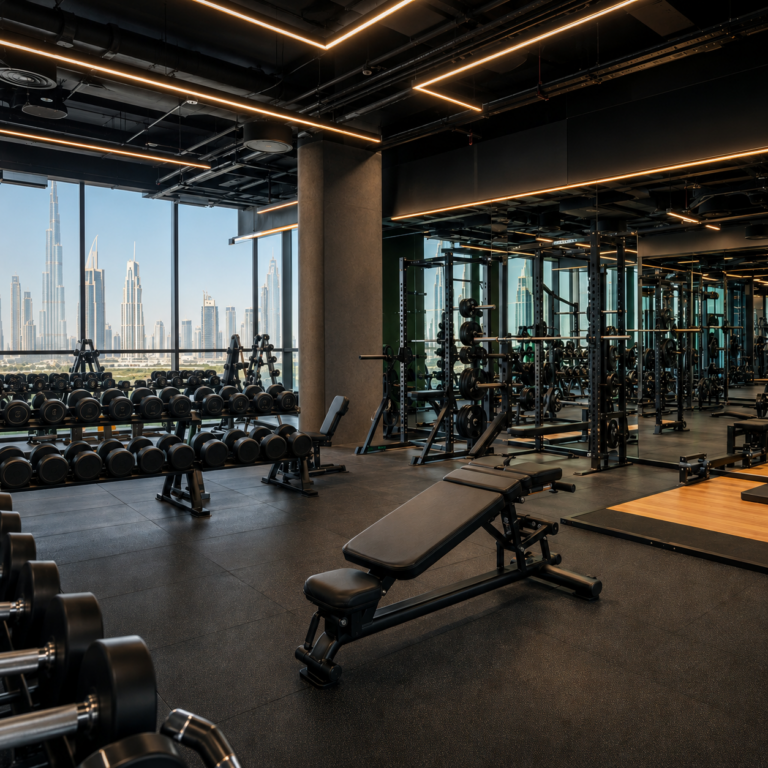
What Is Acoustic Gym Rubber Flooring?
Acoustic gym rubber flooring is a specialised flooring system engineered to serve two functions simultaneously: providing a resilient, durable surface for athletic and gym use, and controlling noise and vibration transmission caused by dropped weights, heavy foot traffic, and cardio equipment.
Unlike standard rubber flooring, acoustic-grade products are manufactured with specific density ratings, Shore hardness values, and multi-layer constructions designed to meet measurable acoustic performance standards — including impact sound reduction (ΔLw) and dynamic stiffness (s’) values relevant to LEED, Estidama, and Dubai Civil Defence compliance requirements.
A properly specified gym rubber room will typically combine:
- A wear layer — the top surface designed for traction, comfort, and durability
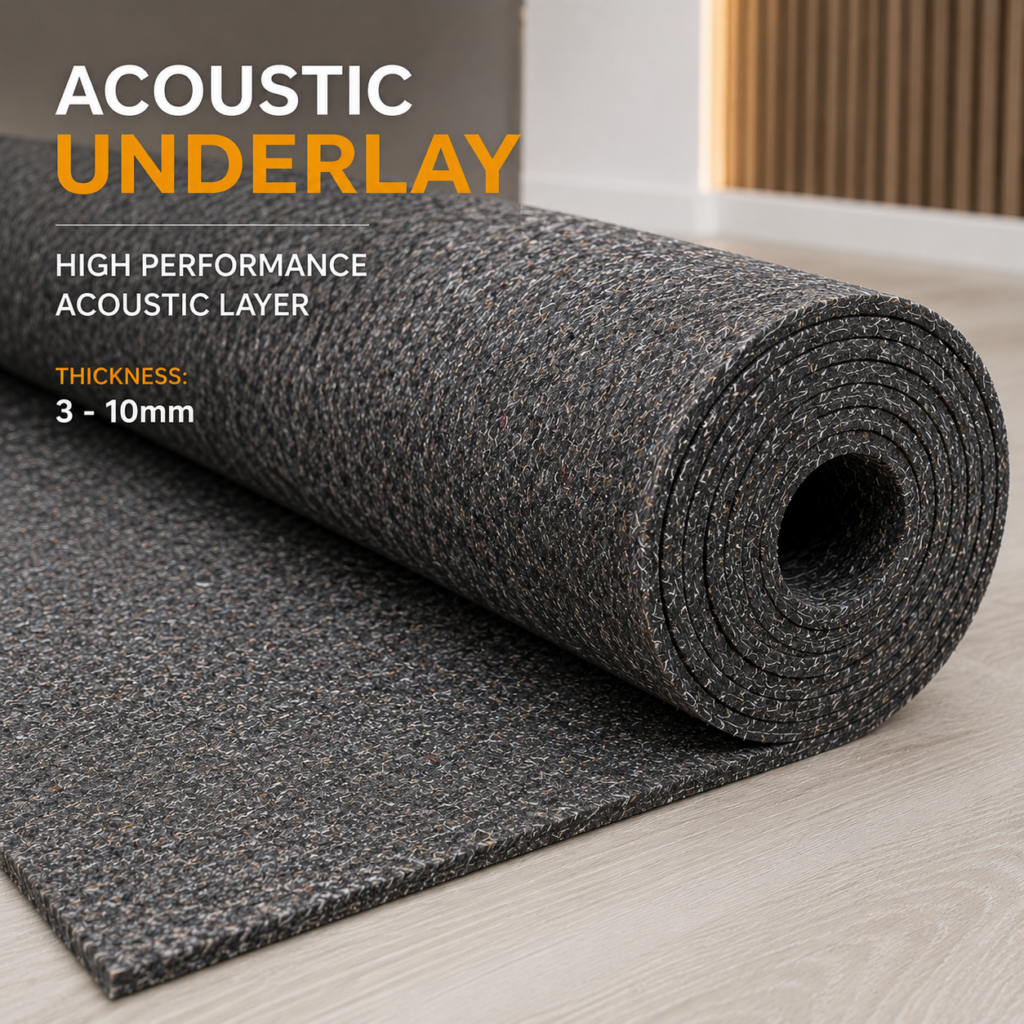
- An acoustic underlay — a resilient intermediate layer that decouples the gym floor from the structural slab
- A subfloor preparation system — levelling compounds, moisture barriers, or raised access solutions depending on the substrate
Why Acoustic Underlay Is Non-Negotiable in a Gym Room Setup
In multi-storey residential towers, commercial buildings, and mixed-use developments — the dominant building typology in Dubai and across the UAE — impact noise from gym rooms is one of the leading causes of occupant complaints.
A gym room setup without proper acoustic underlay allows impact vibrations to travel directly into the building structure, transmitting as airborne noise to adjacent and below-grade spaces. This is not only a comfort issue — it can be a contractual and regulatory one.
Key reasons to specify acoustic underlay in every gym room setup:
- Meets Dubai Civil Defence and UAE building acoustic standards
- Supports Estidama Pearl Rating and LEED Indoor Environmental Quality credits
- Reduces impact sound level (IIC rating) and structure-borne noise
- Protects subfloor finishes and structural integrity
- Extends equipment service life by reducing rebound stress
Planning Your Gym Room Setup — What to Consider
Before specifying your acoustic gym rubber flooring and underlay, consider the following:
1. Load Requirements What equipment will be used? Treadmills, free weights, and Olympic bars create very different dynamic loads. Your flooring specification must match the expected use.
2. Acoustic Performance Targets Does your project require a specific ΔLw or IIC rating? LEED and Estidama projects may require documented test data from the manufacturer.
3. Subfloor Condition Is the substrate level, dry, and structurally sound? Most acoustic underlays require a flat, clean subfloor. CR deviation limits are typically ≤ 3 mm under a 2 m straight edge.
4. Installation Area What is the total area of the gym room? Are there columns, floor drains, or door thresholds to accommodate?
5. Budget and Lifecycle Cost Premium acoustic flooring systems carry higher upfront costs but significantly lower lifecycle costs through reduced maintenance, longer product life, and avoided acoustic remediation works.
6. Compliance Requirements Projects in Dubai must consider compliance with UAE Fire and Life Safety Code, Estidama (for Abu Dhabi projects), and Green Building Regulations. Acoustic gym rubber flooring can contribute meaningfully to these frameworks.
Gym Rubber Room Setup — Step-by-Step Installation Overview
- Subfloor Preparation — Level, clean, and prime the concrete slab. Apply moisture barrier if required.
- Acoustic Underlay Installation — Lay underlay in a staggered joint pattern. Butt joints tightly; do not overlap. Tape joints with appropriate acoustic tape.
- Rubber Flooring Installation — Install tiles or rolls over the underlay. Follow manufacturer adhesive or loose-lay guidance.
- Perimeter Detailing — Install perimeter isolation strips to prevent flanking transmission at walls.
- Finishing — Install transition profiles, wall base trims, and equipment mounts per the gym room design.
Brands We Cater — Leading Acoustic Gym Rubber Flooring Manufacturers & Suppliers
We cater to some of the world’s most trusted brands in acoustic gym rubber flooring, sports flooring, and underlay systems, including Regupol, KRAIBURG, SPORTEC, Pliteq, Ecore, Epoch, Mondo, Bunde, and Terrain. As a Regupol supplier in UAE and Dubai, KRAIBURG supplier in UAE and Dubai, Pliteq supplier in UAE and Dubai, Ecore supplier in UAE and Dubai, Epoch supplier in UAE and Dubai,Bunde supplier in UAE and Dubai, Mondo supplier in UAE and Dubai, and Terrain supplier in UAE and Dubai, we provide carefully selected flooring and acoustic underlay solutions for different gym environments.
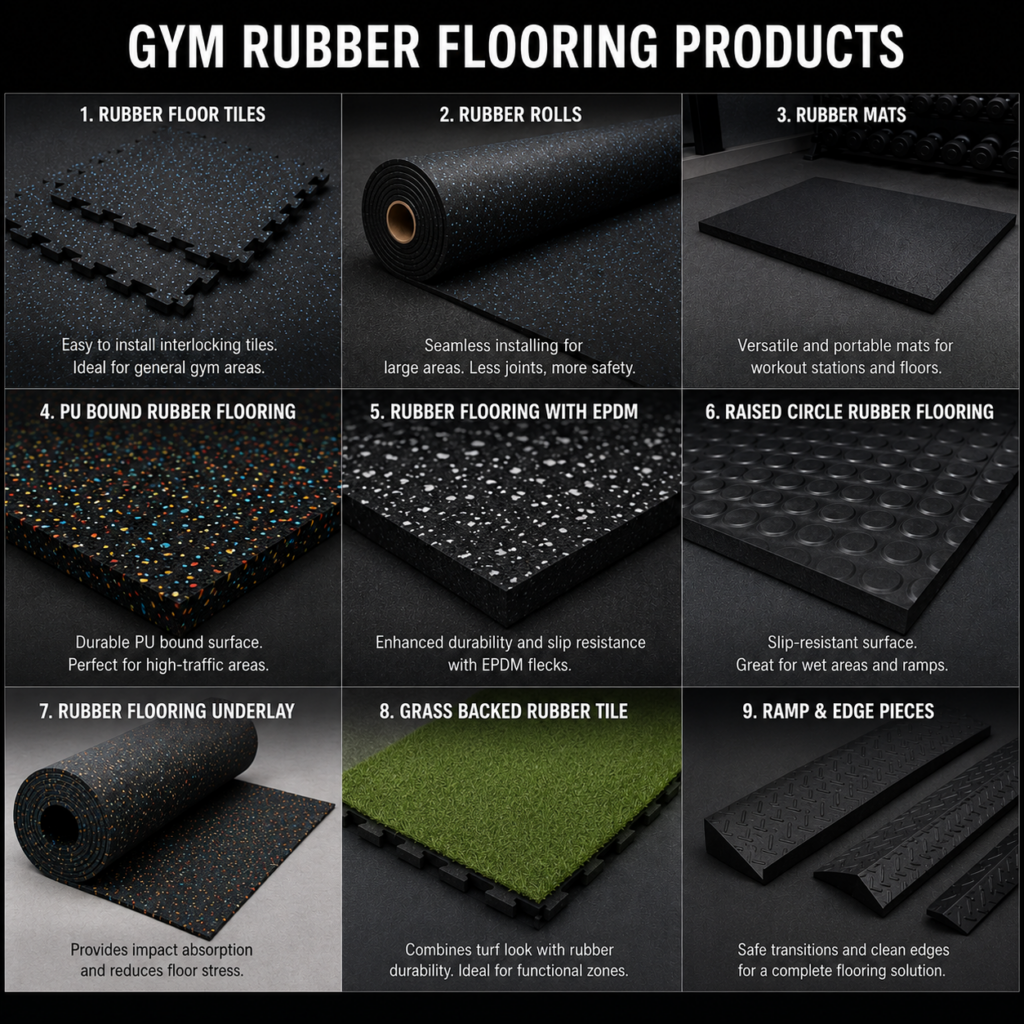
Our range includes Regupol acoustic underlay,Bunde Pliteq acoustic underlay, premium sports flooring from Bunde,Mondo and Ecore, and heavy-duty gym rubber flooring systems from KRAIBURG SPORTEC and Epoch. We also supply KRAIBURG SPORTEC rubber flooring, KRAIBURG SPORTEC flooring, and complete flooring solutions designed for demanding fitness and sports environments.
Whether you need KRAIBURG SPORTEC rubber flooring suppliers in UAE, KRAIBURG SPORTEC rubber flooring suppliers in Dubai, acoustic underlay, or a complete gym flooring package, we supply both the finished flooring layer and the acoustic underlay beneath it.
Our gym flooring solutions are suitable for private home gyms, commercial gyms, fitness centres, hotels, sports facilities, wellness spaces, and large-scale fitness facilities across Dubai and the UAE, helping provide impact absorption, sound control, durability, and performance suited to demanding gym environments.
Acoustic Gym Rubber Flooring in the Dubai & UAE Context
The UAE’s rapid development of mixed-use towers, residential complexes, and commercial facilities has made acoustic performance an increasingly critical consideration in fit-out specifications. Dubai’s Green Building Regulations and Specifications (GBRS) and Abu Dhabi’s Estidama Pearl Rating System both include indoor environmental quality requirements that acoustic gym rubber flooring can help satisfy.
For gym room setups within occupied buildings — hotels, residential towers, offices — a well-specified acoustic rubber flooring and underlay system is not optional; it is a professional and regulatory standard.
FAQ — Frequently Asked Questions
What brands of acoustic gym rubber flooring do you supply?
We cater to leading brands including Regupol, Kriburge, Pliteq, Ecore, Epoch, Mondo, Bunde and Terrain. Each brand offers different product lines to suit a range of gym room setups, performance requirements, and budgets.
Which brand is best for a high-end commercial gym room setup?
For premium commercial gyms and elite fitness facilities, we recommend Mondo or Regupol. Mondo is globally recognised from Olympic-level venues, while Regupol offers independently tested acoustic performance data suitable for LEED and Estidama projects.
How do I choose between the brands you carry?
The right brand depends on your use type, acoustic performance targets, sustainability goals, and budget. We cater to all seven brands — Regupol, Kriburge, Pliteq, Ecore, Epoch, Mondo, and Terrain — and our team can provide a tailored specification recommendation for your gym room setup in Dubai or across the UAE.
Can you supply acoustic gym rubber flooring for large-scale fit-out projects in the UAE?
Yes. We cater to commercial fit-out projects of all scales across Dubai and the wider UAE, supplying and supporting specification of acoustic gym rubber flooring and underlay systems from all brands in our range.
Who are the leading gym rubber flooring brands available in the UAE?
We supply gym rubber flooring and acoustic underlay solutions from leading brands including Regupol, KRAIBURG SPORTEC, Bunde ,Pliteq, Ecore, Epoch, Mondo, and Terrain, subject to product availability and project requirements.
Are you a Regupol supplier in Dubai and the UAE?
Yes. We supply Regupol flooring and acoustic underlay solutions in Dubai and across the UAE for gyms, fitness facilities, sports spaces, and other applications requiring impact and sound control.
Do you supply KRAIBURG SPORTEC rubber flooring in Dubai?
Yes. We provide KRAIBURG SPORTEC rubber flooring in Dubai, with solutions selected according to the application, traffic level, performance requirements, and project specifications.
Are you an Ecore supplier in UAE?
We supply Ecore flooring solutions in the UAE, including flooring systems suitable for fitness, sports, and other high-performance environments.
Are Epoch gym flooring products available in Dubai?
Yes. We supply Epoch gym flooring solutions in Dubai and across the UAE, depending on the specific product and project requirements
Do you supply Bunde Flooring in Dubai and the UAE?
Yes. We supply Bunde Flooring solutions in Dubai and across the UAE, with flooring options suitable for gym, fitness, sports, and other performance flooring applications based on project requirements.
